Understanding the Data Model
How ALT Sports Data organizes categories, sports, leagues, events, markets, and outcomes.
Understanding the Data Model
ALT Sports Data organizes every feed around one normalized hierarchy:
Category -> Sport -> League -> Event -> Market -> Outcome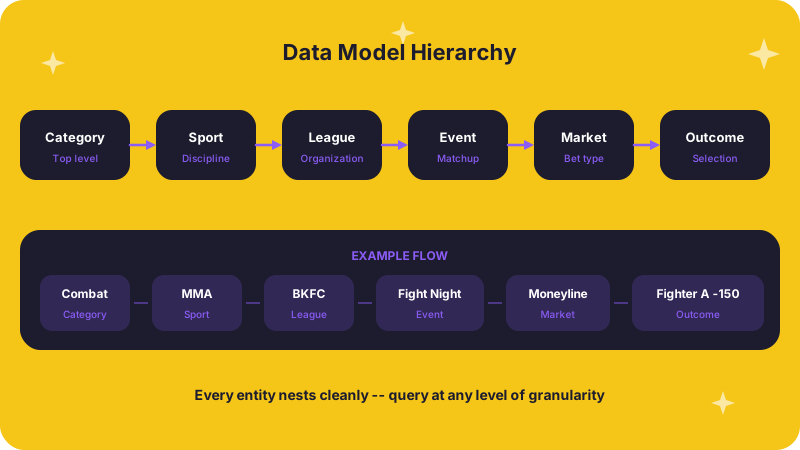
That structure makes it possible to work across very different sports without learning a completely different schema every time.
The hierarchy
Category
The highest-level grouping for how a sport behaves in betting and data workflows.
Examples include:
- Combat
- Racing
- Team
- Precision
- Action
Sport
A sport or discipline inside that category, such as BKFC, Formula Drift, SLS, MASL, or Jai Alai.
League
The organization or competition you are integrating with. A league is usually the commercial and operational unit you care about when onboarding, licensing, or distributing data.
Event
A scheduled contest, matchup, race weekend, card, or slate that fans, operators, and partners interact with in real time.
Market
A betting or prediction market attached to an event.
Examples:
eventWinnerheadToHeadpodiumspropBets
Outcome
The selectable result inside a market, such as a fighter, driver, team, or proposition side with associated pricing.
Why this matters
The hierarchy helps different audiences navigate the same platform:
- Sportsbooks can map leagues, events, and market types into trading workflows.
- Leagues can understand how their event data becomes monetizable betting content.
- Media teams can move from event discovery to embeddable odds and editorial context.
- Developers and AI agents can build once and reuse the same mental model across feeds.
How categories change market behavior
Combat sports
Combat events often emphasize winner, head-to-head, and prop-style markets tied to individual athletes.
Racing sports
Racing events frequently add markets like podiums, exactas, heat winners, and finishing-position variants.
Team sports
Team-based leagues are more likely to expose familiar matchup and score or total-style structures.
The schema stays recognizable even when the market menu changes.