Response Format
Learn the common response shape used across ALT Sports Data endpoints.
Response Format
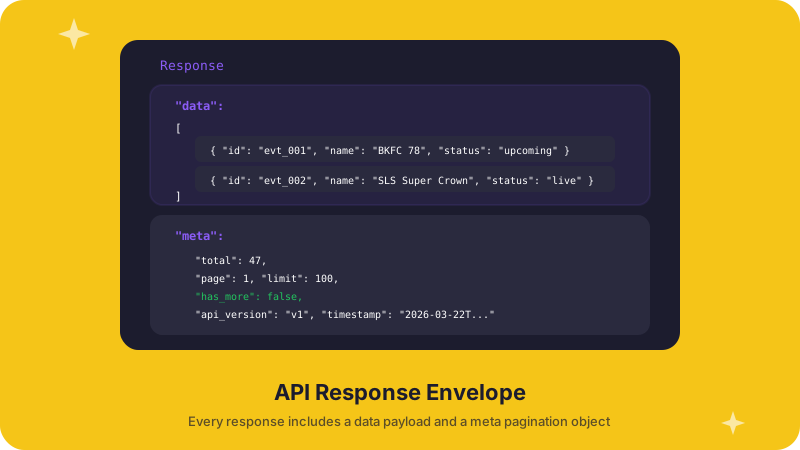
ALT Sports Data keeps responses predictable so you can move from discovery to production without rewriting your integration for every sport or endpoint family.
Standard shape
Most responses include a primary data payload plus a meta block.
{
  "data": [],
  "meta": {
    "total": 100,
    "page": 1,
    "limit": 20,
    "has_more": true,
    "api_version": "v1",
    "timestamp": "2026-03-07T00:00:00Z"
  }
}
What each field does
datacontains the business payload you care about.meta.totaltells you how many records match the query.meta.pageandmeta.limithelp with pagination logic.meta.has_morelets you know whether to keep fetching.meta.api_versionhelps when you are validating compatibility.meta.timestampgives you a consistent response time marker.
Why the normalized format helps
- You can reuse pagination and error-handling code across endpoints.
- SDKs and AI tools can reason about the platform with less custom logic.
- Operators can move between sports, events, markets, and futures without learning a new wrapper structure each time.
Lists vs detail responses
Collection endpoints usually return arrays in data.
Detail endpoints typically return an object in data.
Either way, the surrounding metadata stays familiar.
Error responses
When a request fails, ALT Sports Data switches to a dedicated error
object instead of the success shape:
{
  "error": {
    "code": "VALIDATION_ERROR",
    "message": "Invalid request parameters"
  }
}
See Errors for common failure cases and recovery patterns.